Lucy
My Tender MatadorLucy, the First Lady and wife of Augusto Pinochet, is a talkative, fashion-conscious presence whose domestic chatter repeatedly intersects with national crisis. She argues over hats and clothes, trusts Gonzalo’s predictions, and insists that she foresaw danger to her husband. Her comic certainty does not make her politically detached: the coup-era promises and threats discussed around her, the reports she hears on Radio Cooperativa, and the aftermath of the attack on Pinochet’s motorcade place her private life inside the pressures of dictatorship. As the story follows her from public display to emergency and fear, she becomes both a comic commentator on power and one of its anxious dependents.
Identity and Public Persona
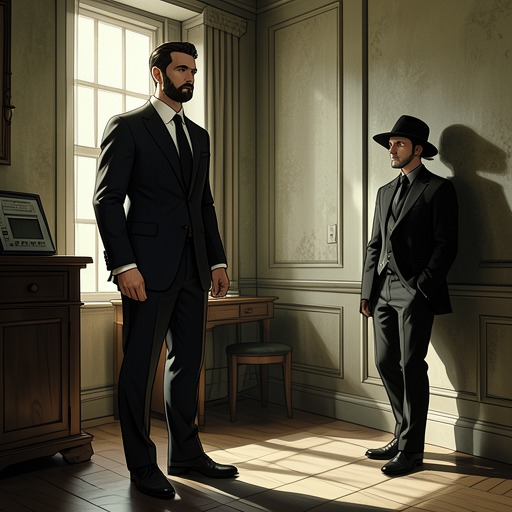
Lucy appears as the First Lady, addressed as Señora Lucy, with a voice marked by self-confidence, gossip, and a keen interest in dress. She contests criticism of her hats by comparing them with military caps, and treats fashion as both pleasure and proof of distinction. When she shows Augusto a Nina Ricci hat sent by Gonzalo from the Canary Islands, she stresses its golden-yellow color, its resemblance to a style associated with Princess Margaret, and its price of five hundred dollars. She contrasts this purchase with the money Augusto spends on weapons, while also complaining that the arms dirty her wallpaper. In this exchange, clothes and military hardware occupy the same domestic argument: her taste is not separate from the household’s political power but is measured against its costs and symbols.
Her self-image depends on being recognized as elegant. Lucy says that women around her admire her silk dresses and greet her respectfully, and she attributes her own manners and clothing sense to lessons from her mother. Yet this account is filtered through her own boastful judgment; the narrative presents her confidence as part of her characterization, not as an objective measure of how others feel. Her repeated insistence that she is right makes her both a comic figure and a persistent voice in Augusto’s private world.
Marriage and Private Life
Augusto remembers Lucy as a very different person from the wife whose chatter fills their later domestic life. In his recollection, she is a seventeen-year-old provincial student, modest and shy at her first party at Club Militar. When he asks her to dance, she objects that the music is a military march and would be an insult to the armed forces. They sit and talk instead; the memory marks the beginning of their relationship, courtship, and marriage. The contrast between that restrained young woman and the forceful First Lady underscores how much her public position has altered the terms of their shared life.
In the present, Augusto often listens to Lucy’s long monologues while lying in bed or trying to rest. Their exchanges turn on her clothes, his weapons, his advisers, and the decisions she says he should have made. She can be scolding and self-congratulatory, while he is at times irritated or withdrawn. Yet her presence also becomes consequential: after the attack, he remembers that she had warned him about bad omens and resolves to take her opinions more seriously, even considering a government advisory role for Gonzalo. Their relationship is therefore not simply a private comedy of complaints; Lucy’s voice gains weight when events appear to confirm her predictions.
Omens, News, and Political Anxiety
Lucy’s confidence in signs and predictions gives her a framework for interpreting political danger. Before the September crisis, a government communiqué announces that a subversive plan has been uncovered and that measures have been taken to prevent violence. Lucy does not accept official reassurance as the only account available. She turns to Radio Cooperativa, which she regards as a reliable source, and listens for further information. The radio’s reports about detainees being transferred to military authorities sharpen her concern, especially because she has heard nothing from Carlos and fears that he may have been arrested with revolutionary students. She considers asking Señora Catita whether her husband, a general, might be able to help. Her attention to the broadcast connects her household worries to the wider climate of arrests and political repression.
Lucy’s political language also reflects the neighborhood atmosphere in which anti-government hopes circulate. The Queen of the Corner hears residents discussing opposition declarations, the Dictator’s threats, and calls to take to the streets in September; the repeated prediction that 1986 will be the year of change supplies a public counterpoint to the regime’s confidence. Lucy’s own warnings are less a program of political resistance than a personal conviction that Augusto ignores danger. When she recalls Gonzalo’s tarot reading and his warning against travel, she uses the prediction to explain why she stayed home while Augusto went away. Her belief in omens becomes a running source of irony: she is mocked or dismissed, but later events make Augusto reconsider her judgment.
The Attack and Its Aftermath
After the attack on Augusto’s motorcade, Lucy’s alarm becomes inseparable from the security failure. At the family house in Cajón del Maipo, officials and relatives arrive in haste while Augusto takes a tranquilizer prescribed by his doctors. Lucy says she had warned him and reproaches him for relying on bodyguards and military trainees. She criticizes the expense of the security arrangements and, with bitter, dark humor, compares their performance unfavorably with that of the Manuel Rodríguez Patriotic Front. Her remarks do not lessen the seriousness of the attack; they expose the gap between the regime’s extensive protective apparatus and its inability to prevent the ambush.
Lucy then presents the shattered windows of the President’s Mercedes-Benz to journalists as evidence of a miracle, identifying the image she sees in the bullet marks as the Virgin of Carmen, patron saint of the army. She proposes exhibiting the vehicle publicly so people can give thanks for Augusto’s survival. Her explanation turns a damaged car into a political and religious symbol, while her exchange with a Radio Cooperativa correspondent shows her impatience with questions she considers foolish. Augusto hears the press conference from his bedroom, still frightened by the attack. The scene places Lucy’s public certainty beside his private vulnerability: she speaks for the saved President while he struggles to recover from the shock.
The consequences extend beyond the presidential household. During the September night of searches, Santiago is sealed off by the army as soldiers search cars, houses, and entire neighborhoods; residents may be kept outside through the night, and people are taken away after hesitation or minor provocation. The Queen of the Corner stays awake with the kettle ready in case Carlos or his friends arrive, and keeps the radio low for news. This parallel makes clear that the same crisis Lucy experiences through the security and publicity surrounding her husband reaches poorer residents as searches, fear, and uncertainty. The novel places the First Lady’s alarm within a wider landscape of state repression rather than treating the attack as an isolated domestic emergency.
Fear, Dreams, and the Limits of Power
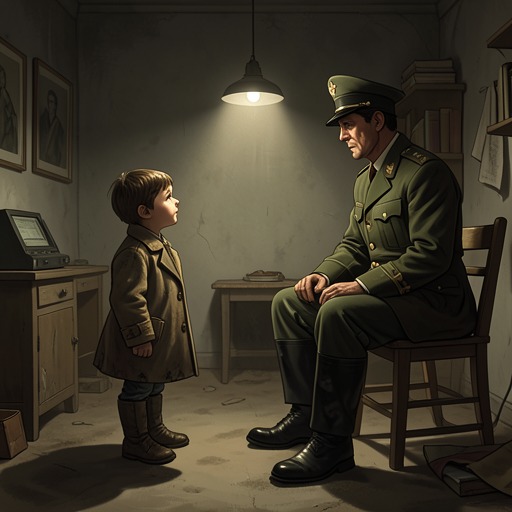
Although Lucy’s public explanations present Augusto as strong and protected, the narrative repeatedly shows how unsettled he has become. Before the attack, a burst of gunfire makes him reach for a small Luger until Lucy explains that cadets have come to salute him on his birthday. Later, after reading a newspaper photograph that makes him look like a mug shot, he lashes out and drives the hummingbirds from the garden with an angry gesture. In a nightmare, he imagines himself exposed and unable to defend himself; he wakes to find his bodyguards and secretary around him and is told that it was only a dream. These episodes render the ruler’s fear privately visible without confusing dream with fact.
After the motorcade attack, Lucy’s interpretation of events has a short-lived effect on Augusto. He recalls her warnings and considers listening to her from then on, even thinking that Gonzalo might be given an advisory position. Yet the possibility of renewed trust does not erase the distance between them or restore security. Lucy continues to complain about the household, his appearance, and the choices she believes he should have made. Near the end, Augusto wakes in alarm and refers to a helicopter; Lucy tells him it is Admiral Urrutia arriving in the garden and gives him his medicine. The episode returns the couple to the domestic pattern of his fear and her brisk response.
Lucy’s narrative significance lies in the way her voice makes authoritarian power look both theatrical and precarious. Her hats, luxury purchases, and press statements display rank, while her reliance on Gonzalo’s tarot readings and her repeated warnings reveal a household unable to command certainty. Her comic manner does not cancel the violence of the regime or the consequences of its security crisis. Instead, the contrast between her confident performance and the searches, arrests, and fear beyond the presidential residence shows how political power can dominate public life while remaining insecure in private.